
Does the baby sparkle?
An afternoon at the Detroit Institute of Arts

The museum opens, as any good museum should, with a bunch of swords.
The Detroit Institute of Arts (DIA) had been presented to me by my brother as a must-see part of the city. I had hurriedly walked past the front desk, because I wasn’t sure if I needed a ticket, but was thwarted by the unexpected militia of knights that accompanied the swords.
Facing the knights, and grand enough to take up a wall by itself, is an incredible piece by El Anatsui, a Ghanaian artist based in Nigeria. This work, Amemo (Mask of Humankind), is a part of his bottle-top series. The glittering tapestry is enormous, over 17 feet in height. As it hung draping over its onlookers, I wanted to reach up and feel the crinkly blanket myself (an urge resisted only because I was, as rarely happens, too short).
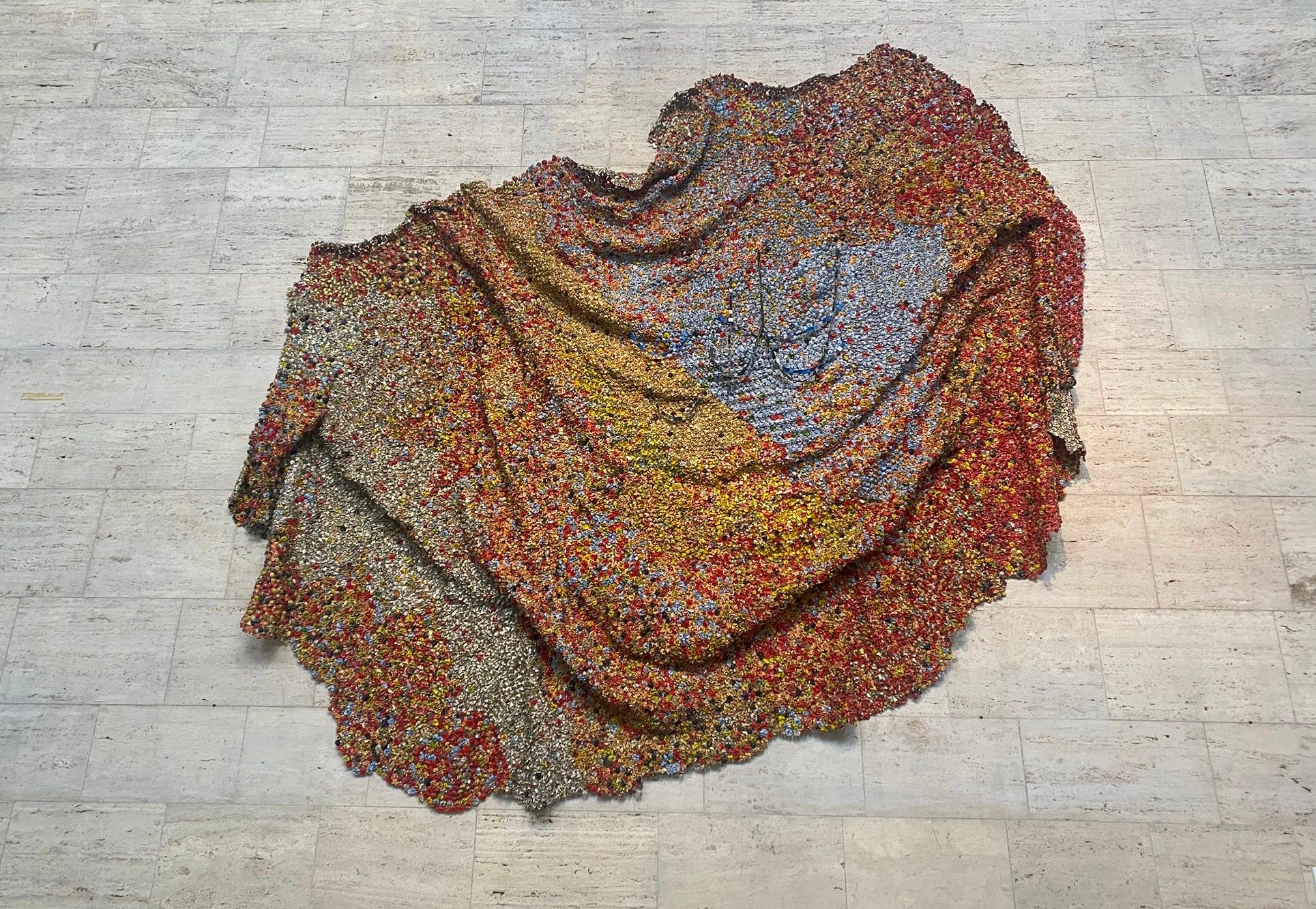
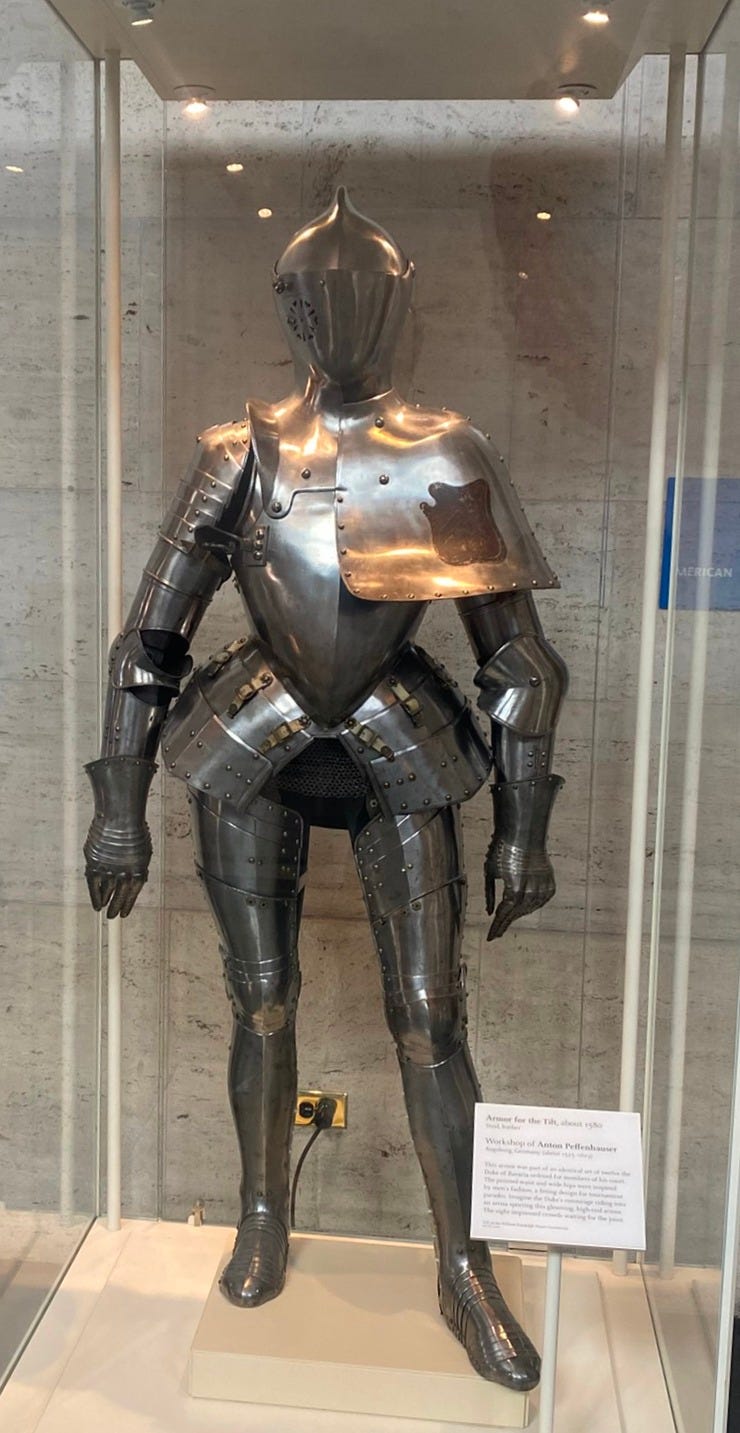
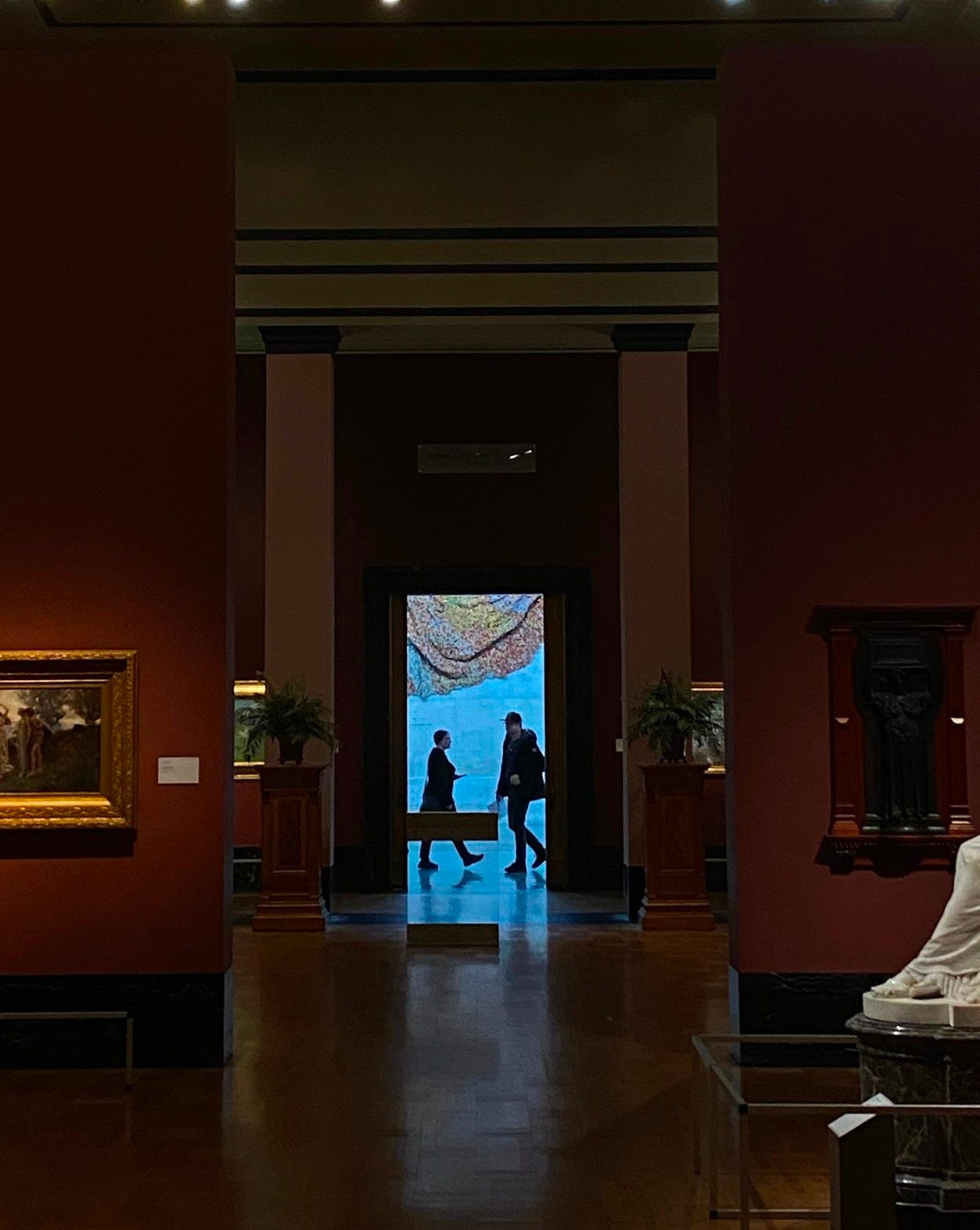
There is much to see and to write about when it comes to the DIA — it’s a massive museum with an incredible collection. In trying to keep these rambles to below a certain word count (and a desire to retain the attention of you, dear reader), I will not attempt to analyze it all. I think the best way to describe the DIA’s niche is the past/present paradigm that it sets up with its collections. As exemplified by the grand entrance hall, the DIA careful crafts this balance throughout the museum.
This line between old and new is underscored by the museum’s fresco-lined interior courtyard, which houses the Detroit Industry Murals, an absolute masterpiece of frescoes by Mexican painter Diego Rivera. The massive size of them will overwhelm the viewer; I got dizzy gazing up at them, doing slow, shambling pirouettes to see it all.
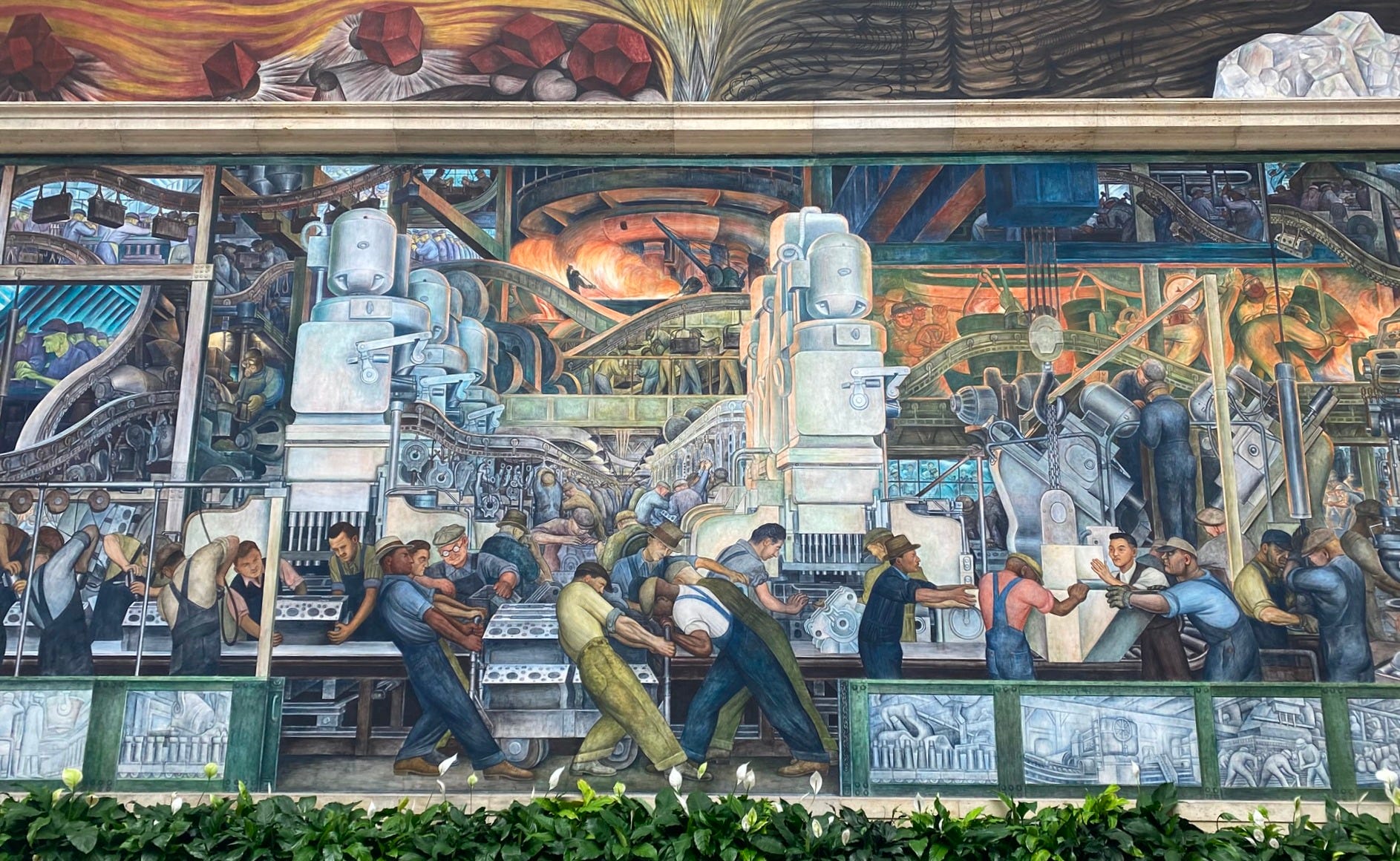
Rivera was commissioned with a core goal of depicting the industry of the city, but ultimately full artistic freedom was given to him. He definitely took this leeway, as can be seen by the murals’ critical messaging. While the panels speak to the awe Rivera felt at the power and might of Detroit’s manufacturing industry, it also illustrates the danger he saw in its advancements. Planes are built for travel and also for war; scientific advancements lead to vaccinations as well as chemicals whose sole purpose is to harm. Rivera’s work represents a city, and a country, in the throes of industrialization. But, to what purpose?
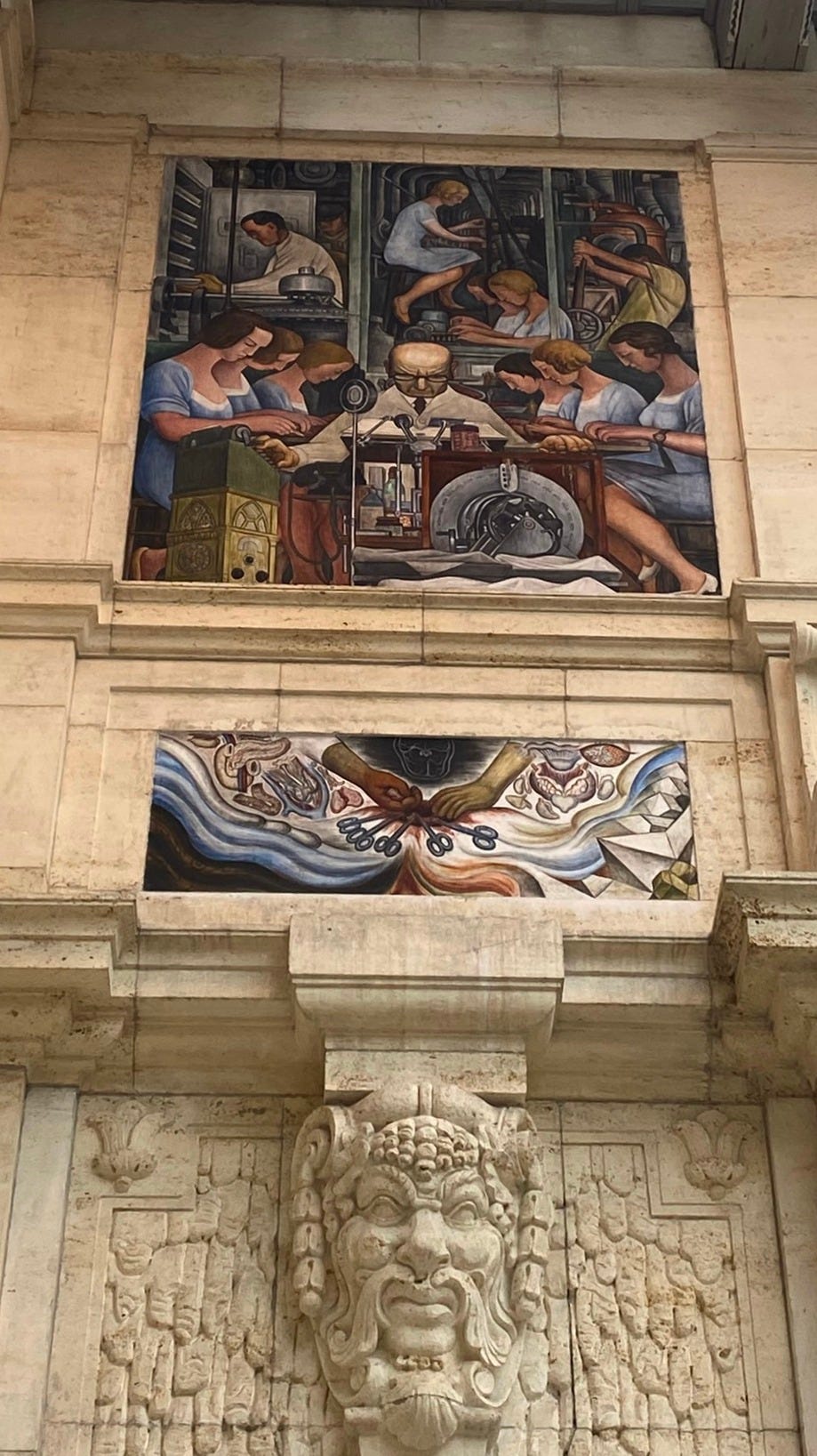
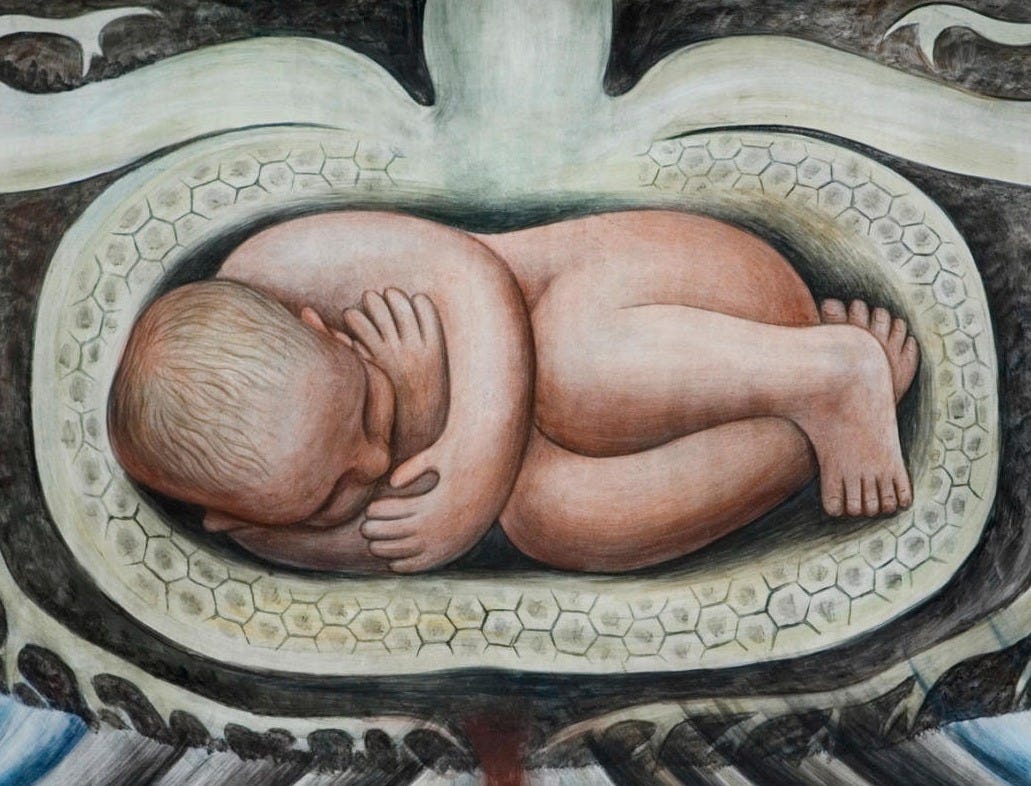
One of the most famous panels of this work is on the east wall, an unborn baby growing within the earth. This uncommon tuber is the source of a heavily debated question — does the baby sparkle? There is a rumor that at some unknown times in unknown conditions, the light hits the baby in just the right way to make it shine. One docent said she has worked at the DIA for over 30 years and has yet to see the phenomenon (she also cast immense doubt on her colleague’s assertion that it does, in fact, sparkle).
On either side of the Rivera court, the DIA expands in an endless maze of galleries. Take the door on the North Wall, and find works from American artists, as well as a fully reconstructed Massachusetts kitchen (for what purpose, I am not sure). Take the door on the South Wall, and find an incredible modernism collection, as well as galleries of medieval French and Italian art. This includes a rebuilt 16th-century chapel, fitted with stained glass (purpose, I assume, to promote a resurgence of Catholic guilt).
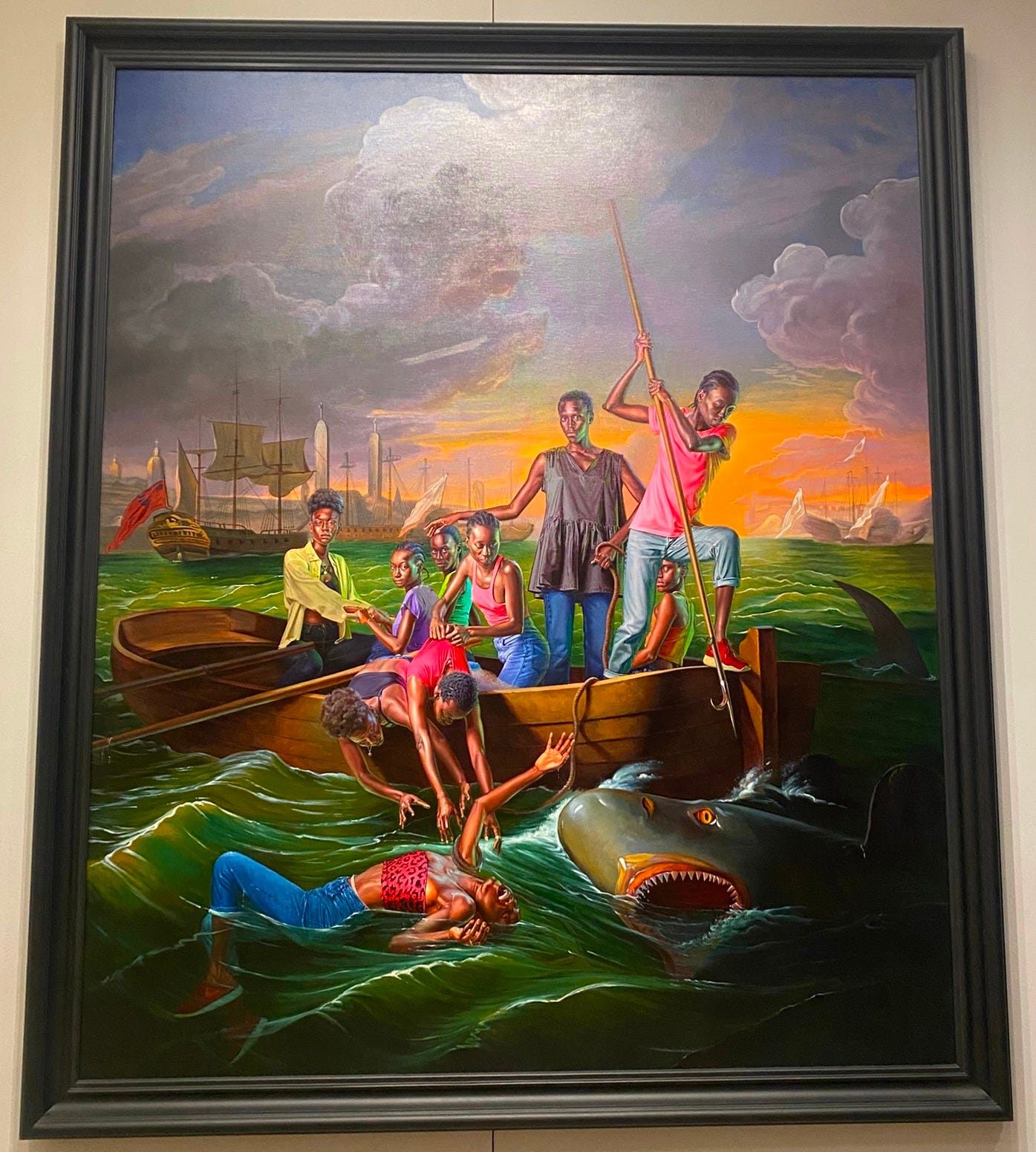
One of my favorite finds of this past/present balance is Watson and the Shark (1782) by John Singleton Copley and Untitled (Copley) (2022) by Kehinde Wiley.
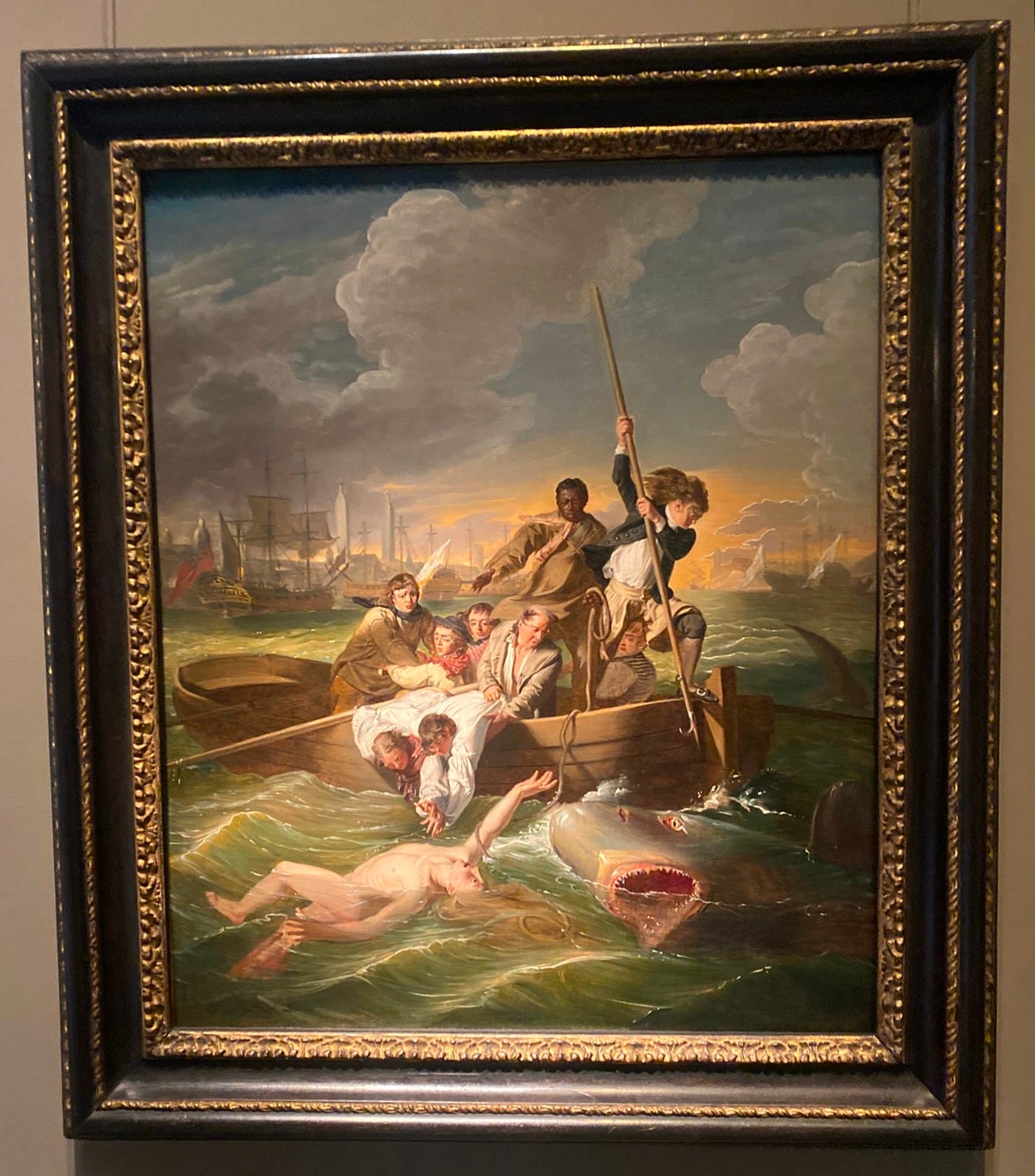
The story behind the original painting is a true one. The boy floating in the water is Brook Watson, a cabin boy who survived a shark attack at 14 in the harbor of Havana, Cuba. After losing part of his right leg to the shark, Watson went on to become a successful merchant who commissioned Copley to depict his survival. My favorite thing about this painting is that Copley (a) had never been to Havana and (b) was unlikely to have ever seen a shark.
I happened upon Copley’s work first and then, lost in the maze that is the DIA, found Wiley’s rendition. Wiley, known for many works including his portraits of the Obamas, paints in the tradition of dramatic European and American portraiture. In this painting, he replaced Copley’s figures with Senegalese women posed in the same stances as the figures in Watson and the Shark. In a blurb about the piece, it is described how Wiley’s work highlights the lack of depictions of people of color in art history by reworking older paintings, as he does in Untitled (Copley).
Just down the hall from where I saw the Wiley painting was the DIA’s temporary exhibit, Contemporary Anishinaabe Art: A Continuation. It was incredible to walk through this collection, which includes 60 artists from the Great Lakes region. These contemporary artists are part of an ongoing lineage, centuries-long. In contrast to the past/present curation of the rest of the DIA, this is a continuation, not a divide between old and new.

The Continuation exhibit was not limited by style, theme, or medium. It included sculpture, photography, beadwork, and many more styles and category-defying art by Anishinaabe artists. Each work was accompanied by an artist statement to contextualize the piece in the artist’s own words. It was something I had never seen in an exhibit before and allowed each piece to signify the exact message of the artist, to carry on a conversation with each viewer.
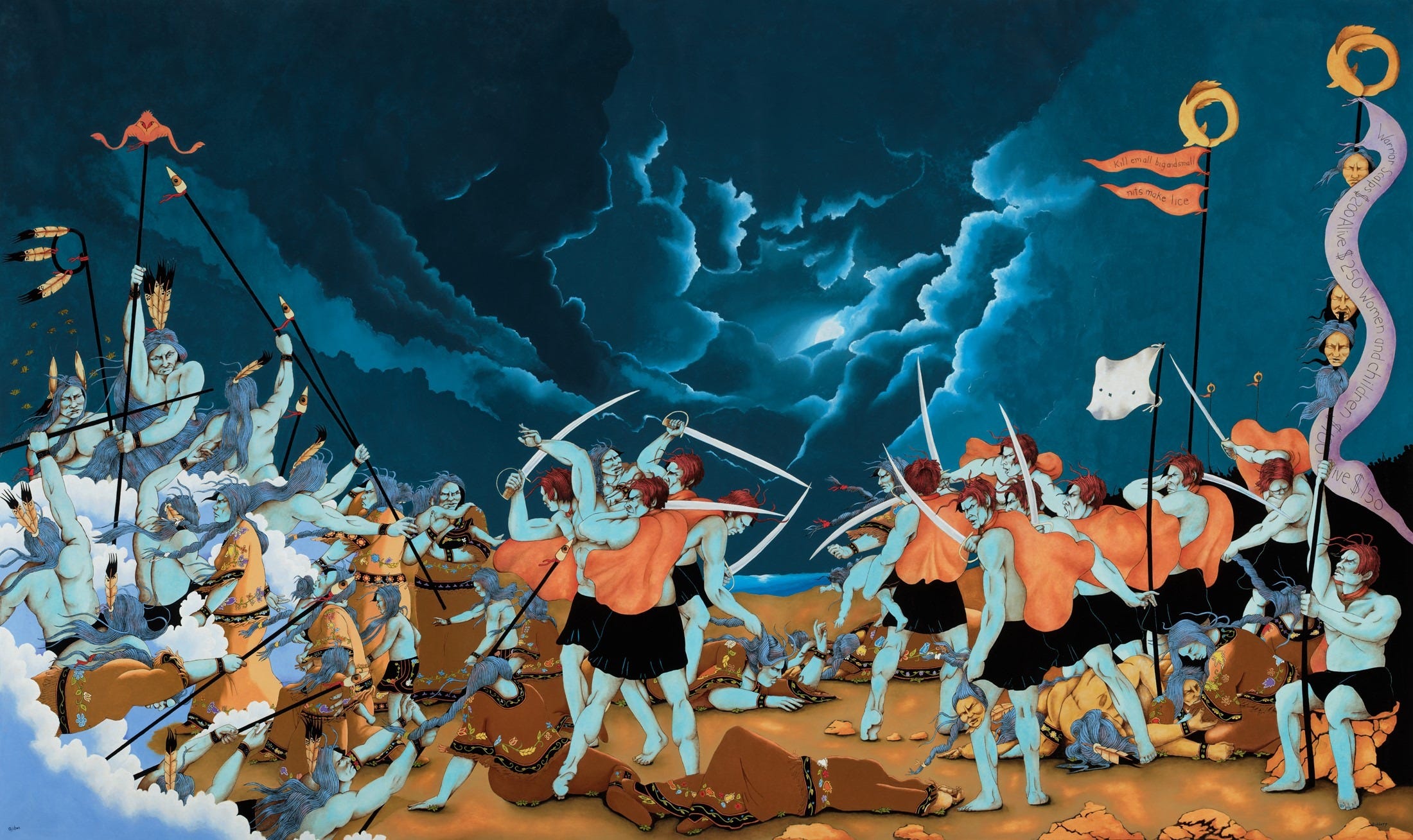
Of I Get Mad Because I Love You, Thompson says that the choice to make the “I Love You” more visible is to emphasize “the difficulty of deciphering between action and words in situations of psychological abuse.” The scale of the piece is striking in contrast to the delicate, precise beadwork. Strickland imbues Right to Consciousness with this message — “Don’t let the lack of film and photographs take away from the fact that there was a genocide.”
There are thousands of works housed in the DIA’s collection, and I have many more photos of pieces that struck me. But I am running out of synonyms to describe my amazement for them, and will save you from much more fawning. I think my favorite thing about the DIA was the narrative that the museum so carefully builds. As with any major art museum, the labyrinthine galleries can begin to feel endless. But where the DIA differs is how it pulls you back in. And it isn’t just the exhibits, but the docents and the fellow museum-goers that make you want to keep engaging.
The DIA feels like a love letter to Detroit — its history and its living legacy. A care is taken to show artists that have been shaped there and gone on to inspire the city in turn. I think you can feel the opposing forces that have made Detroit — the natural world and the expansion of industry, a respect for the past and a keen interest in the future. And, most importantly, a drab, plain infant vs. a sparkly baby.
Just went to the DIA and then read it which made the whole experience better!
“I Get Mad Because I Love You” I believe I’ve said those exact words to you triggy hahah